Captivating Interactive Out-of-Home Advertising Examples
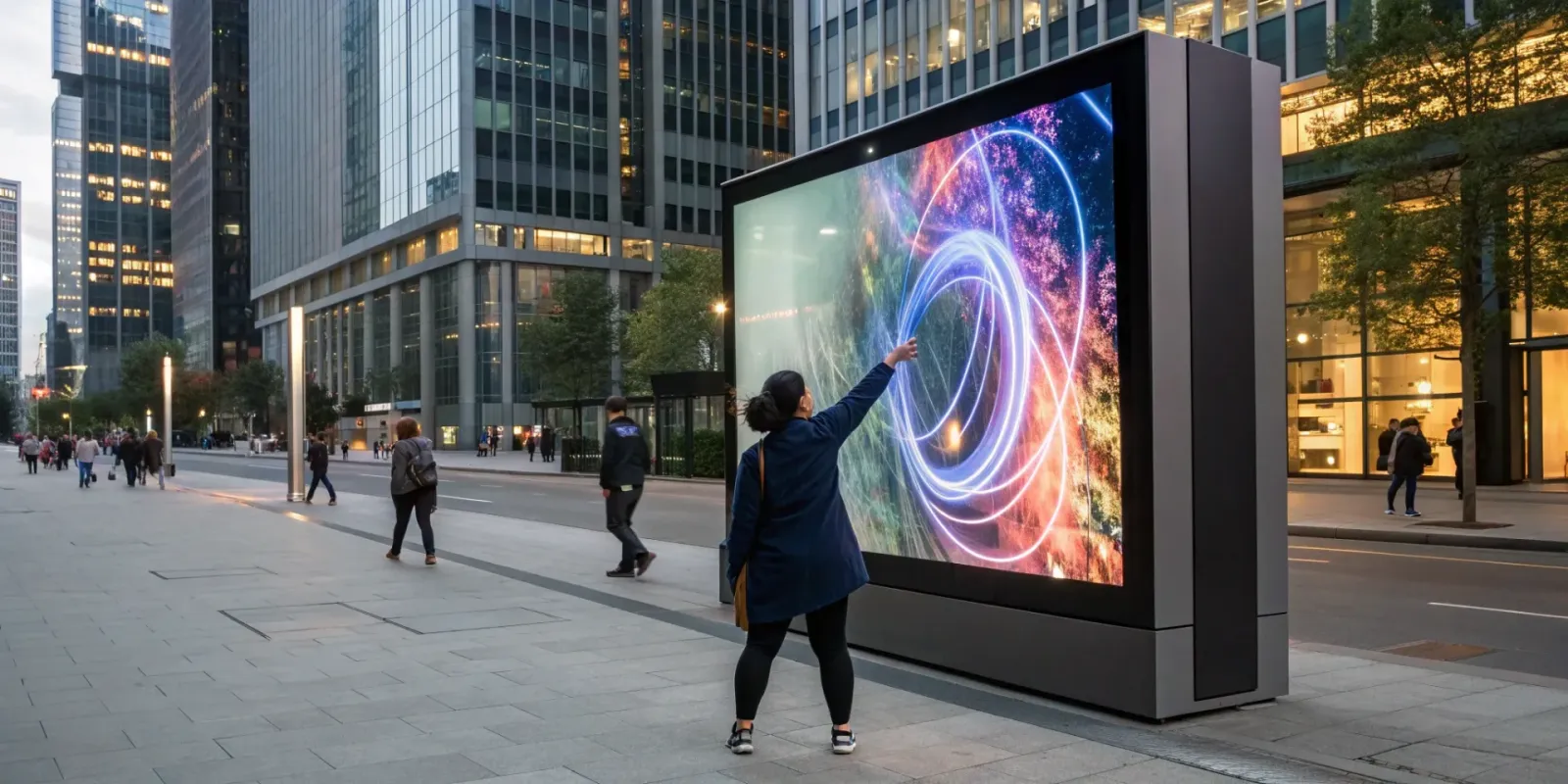
Think about the last ad you saw that truly stuck with you. Chances are, it wasn't just a pretty picture. It was probably something that made you laugh, made you curious, or gave you something to do. We remember the experiences that make us feel like a participant, not just a spectator. This is the magic of interactive out of home advertising. It transforms public spaces into playgrounds for brands and people to connect. It's about respecting an audience's time by offering them something valuable in return for their attention—whether that's a moment of fun, exclusive content, or a special offer.
Key Takeaways
- Offer a Clear Reward: People will only interact if there's something in it for them. Make the value—whether it's a fun game, an exclusive discount, or helpful content—obvious and easy to claim.
- Make Your Visual the Starting Point: Use scannable technology to turn your entire image into a direct link to a digital experience. This removes friction and invites your audience to seamlessly move from the street to your website, app, or social campaign using their own phone.
- Measure Actions, Not Just Views: Go beyond impressions to track the data that truly shows impact. Monitor metrics like scan rates, social shares, dwell time, and sales lift to understand how your interactive ad is influencing audience behavior.
What Turns a Billboard into an Experience?
For decades, billboards were simple, static signs you'd glance at from your car. But today, the best out-of-home (OOH) advertising does more than just show you something—it invites you to do something. It transforms a passive glance into an active moment. This shift is all about turning a simple advertisement into a memorable experience that people want to be a part of. It's about creating a connection, not just an impression. So, what are the key elements that make this transformation happen? It comes down to a mix of creative storytelling, smart technology, and a real understanding of what makes people pause and play.
From Static Signs to Dynamic Stories
The biggest change in outdoor advertising is the move from static images to dynamic stories. Thanks to Digital Out-of-Home (DOOH) advertising, what was once a printed poster can now be a massive screen with vibrant, moving and 3D content. This technology allows brands to tell stories that evolve throughout the day or react to their environment. Instead of a single, unchanging message, a billboard can become a canvas for short films, animated art, or data visualizations. It's a powerful way to capture attention because it replaces a flat advertisement with a piece of public entertainment, making the brand a part of the city's visual landscape.
The Key Ingredients for Interaction
An experience requires participation. The goal of interactive OOH is to get people to do more than just look; it's to encourage interaction and participation. The magic happens when you successfully merge the physical ad with the digital tools we all carry in our pockets. By integrating elements like scannable codes, mobile games, or social media prompts, you create a bridge between your billboard and your audience's phones. This turns a one-way broadcast into a two-way conversation. The key is to think about your ad as a starting point for an action, not just a piece of information to be seen.
Why People Actually Stop and Engage
Let's be honest: we're all busy. Getting someone to stop and interact with an ad takes a special hook. Often, it's the promise of a reward, a moment of fun, or a bit of surprise. Think of JetBlue's campaign that asked people to "steal" bus shelter ads to win flight vouchers. Another brand used a digital screen in a subway that triggered a coffee ad whenever someone yawned. These campaigns work because they are relevant, playful, and offer clear value. When you make the viewer a part of the story, they're far more likely to remember you. And it pays off—research shows that 69% of consumers have purchased something because of an OOH ad.
The Tech That Brings OOH Ads to Life
The magic behind interactive out-of-home (OOH) advertising isn't really magic—it's a clever mix of technologies that turn a simple ad into a memorable experience. These tools are what allow brands to start a conversation with you, right on the street. Instead of just pushing a message out, interactive OOH pulls you in, making you a part of the story. It's the difference between seeing a poster for a new car and using a touchscreen at a bus stop to customize its color and features. This shift from passive viewing to active participation is what makes these campaigns so powerful.
This transformation is powered by a range of tech, from massive smart screens and motion sensors to augmented reality and real-time data feeds. By blending the physical and digital worlds, these ads invite you to play, explore, and connect in a way that feels fresh and exciting. The goal is to create a moment that sticks with you long after you've walked away, building a genuine connection between you and the brand. It's not just about showing you something; it's about giving you something to do. Let's look at the key technologies that are making these captivating experiences possible.
Smart Screens and Touch Technology
The foundation of most modern interactive ads is the screen itself. Digital Out-of-Home (DOOH) advertising uses large, vibrant screens to display dynamic content that can move, change, and even react. Think of the massive, animated billboards in Times Square. These aren't just playing video loops; they're powerful platforms for creativity. Some of the most inspiring DOOH examples mix stunning visuals with imaginative concepts to grab your attention. Adding touch technology takes it a step further, turning the screen into a giant tablet where you can play a game, browse a catalog, or customize a product. This hands-on approach makes the experience personal and far more engaging than a traditional ad.
Responding to Motion and Gestures
What if an ad could see you? Some of the most delightful interactive ads use cameras or sensors to respond to what people are doing nearby. Imagine walking through a subway station and seeing a digital billboard for a coffee brand that yawns right back at you—a clever way to suggest you might need a caffeine fix. This kind of reactive technology creates a moment of surprise and personal connection. By responding to simple gestures or movements, the ad feels like it's interacting directly with you. It's a playful approach that can make a brand feel more human and approachable, turning a simple passerby into an active participant in the ad's story.
Connecting Ads to Phones with QR and IRCODEs
One of the biggest goals of interactive OOH is to bridge the gap between the physical ad and your digital life. This is where your phone comes in. You've likely seen QR codes on posters, but the technology is getting much more seamless. For example, the MTA and Amazon once set up kiosks in subway stations, allowing people to scan and shop for gifts while waiting for their train. Today, platforms like IRCODE are taking this a step further by turning the entire image into a scannable code. Instead of looking for a small box to scan, you can just point your phone at the ad itself to unlock exclusive content, make a purchase, or enter a contest.
Adding a Layer of Augmented Reality
Augmented reality (AR) adds a digital layer to the world around you through your phone's camera. It's a powerful tool for OOH because it can transform a flat ad into an immersive 3D experience. Imagine standing at a bus shelter and being able to explore the inside of an airplane, just by pointing your phone at the ad. That's exactly what Virgin America did, using Google Street View to give people a virtual tour of their cabins. AR invites curiosity and rewards it with a rich, interactive experience that feels like you've discovered something special. It's one of the most effective interactive OOH ideas for creating a lasting impression.
Using Real-Time Data to Stay Relevant
The most effective ads feel like they're speaking directly to you, right now. Using real-time data allows OOH campaigns to stay incredibly relevant. Digital billboards can be programmed to show live sports scores during a big game or display different ads based on the current weather. For instance, Guinness might promote its rich stout on a cold day, while Aperol could showcase its refreshing spritz when the sun comes out. This dynamic capability ensures the message is always timely and context-aware. By pulling in live data, brands can deliver ads that are not only interesting but genuinely useful, making them much harder to ignore.
How to Create an Unforgettable Interactive Ad
The most memorable ads don't just talk at you; they invite you into a conversation. Gone are the days when a clever tagline on a static billboard was enough to capture attention. Today, the goal is to create an experience—a moment of surprise, delight, or connection that makes someone stop, pull out their phone, and engage. This shift from passive viewing to active participation is the heart of modern interactive advertising. It's about transforming a simple visual into a gateway for a deeper story, a fun game, or a valuable offer.
But how do you actually make that happen? It's less about having the flashiest technology and more about understanding what makes people tick. An unforgettable interactive ad respects your audience's time and intelligence by offering something meaningful in return for their attention. It's a two-way street. You're not just pushing a message; you're creating a shared moment. With tools like IRCODE, any image can become the starting point for this journey, allowing you to embed an entire interactive world into a poster, a magazine page, or a digital screen. The key is to build an experience that feels intuitive, rewarding, and worth a person's time. The following strategies are your building blocks for turning a simple ad into a lasting memory.
Give People a Reason to Participate
Before anyone interacts with your ad, they're subconsciously asking, "What's in it for me?" Your first job is to answer that question clearly and compellingly. People are busy, so you need to give them a great reason to pause and engage. These campaigns are designed to get people to do more than just look; they encourage interaction and participation by offering genuine value. This value can take many forms: a discount on their next purchase, access to exclusive content, a helpful tool, or simply a moment of pure entertainment. Whatever you offer, make the benefit obvious and the action required to get it simple. A quick scan of an image should lead directly to the reward, creating a seamless and satisfying experience.
Turn Your Ad into a Game
One of the most powerful ways to capture attention is to make your ad feel less like an ad and more like a game. Gamification taps into our natural love of play, challenge, and achievement, creating positive emotional connections with your brand. Think about how Kumho Tires let commuters in a subway station play virtual basketball with a famous player. They weren't just selling tires; they were offering a moment of fun and friendly competition. You can do the same by building simple games like quizzes, scavenger hunts, or puzzles into your visuals. When someone scans your ad, they can be taken to a mini-game that's both entertaining and subtly reinforces your brand message, making it far more memorable than a standard ad.
Encourage Social Sharing
The best interactive ads have a ripple effect, extending their reach far beyond their physical location. You can spark this by creating an experience people are excited to share with their friends and followers. A great example is when TOMS used digital signs to encourage people to post photos of their bare feet on Instagram with the hashtag #withoutshoes, donating a pair of shoes for every post. This campaign was successful because it was visually compelling and tied to a meaningful cause. When designing your interactive element, think about what would make someone want to post about it. Create a visually stunning outcome, a hilarious result, or a powerful emotional moment, and make it incredibly easy for them to share it on their social channels.
Keep Your Content Fresh and Dynamic
A static ad can quickly become part of the background scenery. A dynamic ad, however, feels alive and relevant. Modern digital out-of-home advertising can change based on real-time data like the weather, time of day, or even local sports scores. This makes the message feel incredibly personal and timely. For instance, a restaurant's ad could promote hot coffee on a cold morning and refreshing iced tea during a heatwave. Even if your ad is a physical print, the experience it links to can be dynamic. You can use a single scannable image to point to different content throughout the day or week, keeping the experience fresh for people who see it regularly and giving them a reason to engage more than once.
Designing for a Touch-Free World
In a world where people are more conscious of physical contact, designing touch-free interactions is essential. This is about more than just hygiene; it's about meeting people where they are—on their own personal devices. Technologies that respond to presence or gestures are one way to do this, but one of the most accessible methods is using scannable visuals. By making your image the code, you allow people to launch an interactive experience using their own smartphone, creating a seamless and comfortable bridge between your physical ad and your digital content. This approach puts the user in control and leverages the powerful device they already carry everywhere, making engagement feel natural and effortless.
Planning Your Interactive Campaign for Success
A brilliant idea is just the beginning. To create an interactive ad that truly connects with people, you need a solid plan. Think of it as building a bridge between your message and your audience—every piece needs to be in the right place for it to work. It's less about having the flashiest tech and more about using it thoughtfully. A successful campaign is born from smart strategy, from picking the perfect spot on the street to designing a visual that stops people in their tracks. Let's walk through the key steps to make sure your interactive campaign not only launches but lands with real impact.
Choose the Right Place and Time
Location is everything. The most creative ad will fall flat if it's not where your audience is. Think about the daily journey of the people you want to reach. Where do they work, shop, and hang out? Placing your ad in a relevant context makes it feel less like an interruption and more like a helpful discovery. For example, the fast-food chain Mad Mex ran a campaign placing ads within a one-kilometer radius of its restaurants, catching people when they were nearby and likely thinking about lunch. This kind of strategic placement is key for turning a passerby into a customer.
Know Who You're Talking To
Once you know where your audience is, you need to know who they are. A generic message rarely resonates. The beauty of modern OOH is the ability to tailor your creative to the specific people who will see it. Using data analytics helps you understand the local demographic. Are they health-conscious? Looking for a bargain? Mad Mex adapted its messaging based on these local preferences, highlighting taste in one area and value in another. This level of personalization shows you understand your audience and makes your message far more compelling.
Design for Instant Impact
You have seconds—maybe less—to capture someone's attention. Your design needs to do the heavy lifting. In a crowded visual landscape, static images can get lost. Instead, focus on creating something visually striking that demands a second look. Think about incorporating movement, surprising transformations, or eye-popping 3D elements. Campaigns for Willy Wonka and Nike Air Max used stunning 3D visuals to create a sense of wonder and draw people in. Your goal is to make someone pause, look closer, and feel compelled to interact.
Connect Your Ad to Other Channels
An interactive ad shouldn't be a dead end. It should be the start of a conversation that continues on other platforms. By integrating your physical ad with digital channels, you create a more complete and memorable brand experience. When someone scans your IRCODE, where do they go next? The journey should be seamless, whether it leads to a mobile game, a special offer on your website, or an augmented reality filter for social media. This multi-channel approach deepens the connection and gives people more ways to engage with your brand.
Respect User Privacy and Data
As we use technology to create more responsive and personalized ads, we also take on the responsibility of protecting user privacy. People are more aware than ever of how their data is used, and trust is paramount. If you're using sensors or other tech to gather information, be transparent and always prioritize data protection. Building a campaign on a foundation of respect isn't just good ethics; it's good business. When people feel safe interacting with your brand, they're more likely to engage openly and build a lasting relationship with you.
How to Know if Your Interactive Ad Is Working
You've launched a brilliant interactive out-of-home campaign. It looks amazing, and people seem to be stopping to look. But how do you know if it's actually working? Unlike a static billboard, interactive ads give you a treasure trove of data to show what's resonating with your audience. The key is knowing what to look for.
Measuring success isn't just about counting eyeballs. It's about tracking actions and understanding the real impact your campaign is having on brand awareness, customer engagement, and ultimately, sales. The beauty of interactive technology is that it turns vague impressions into concrete data. You can see exactly how many people scanned your code, played your game, or visited your website after seeing your ad. This allows you to prove ROI and continuously improve your strategy. Let's dig into the key metrics that will show you whether your campaign is a hit or needs some fine-tuning.
Track Engagement Rates and Scans
The most straightforward way to measure interaction is to count how many people actually engaged with your ad. If you're using scannable codes, how many scans did you get? If it's a touchscreen, how many people interacted with it? This engagement rate is your first indicator of success. A high rate means your call-to-action was compelling and your offer was valuable. A low rate might mean you need to rethink your messaging or placement. By tracking these interactions, you can see which creative approaches, locations, or times of day work best, allowing you to optimize your campaign in real time for better results.
Monitor Social Media Shares and Mentions
If your campaign encourages people to share their experience on social media, keep a close eye on those channels. Track how many people are posting about your ad, using your branded hashtag, or tagging your brand. This organic social activity is gold—it extends your reach far beyond the physical location of your ad and builds authentic buzz. A spike in social mentions shows that your campaign is resonating and giving people something they're excited to talk about. It also provides you with user-generated content you can repurpose, creating a virtuous cycle of engagement and brand awareness.
Measure Dwell Time and Audience Attention
How long are people stopping to look at your ad? Dwell time—the amount of time someone spends engaging with your content—is a strong indicator of interest. If people are just glancing and walking away, your ad might not be compelling enough. But if they're lingering, exploring different options on a touchscreen, or pulling out their phones to scan, that's a win. Some digital screens can even use sensors to measure how long people look at the ad. This data helps you understand what elements of your creative are capturing and holding attention, giving you insights to make your next campaign even stronger.
Analyze Conversion and Sales Lift
At the end of the day, does your interactive ad drive business? This is the ultimate measure of success. If your campaign encourages people to make a purchase, sign up for a newsletter, or visit a store, track those conversions. Use unique codes or landing pages so you can attribute actions directly to your OOH campaign. For example, if you offered a discount code that could only be accessed by scanning your ad, you can see exactly how many people redeemed it. Many brands have seen significant sales lifts from interactive OOH campaigns, proving that the right experience can turn a passerby into a paying customer.
Gather Direct Feedback from Your Audience
Sometimes the best insights come straight from the source. Consider including a quick survey or feedback mechanism as part of your interactive experience. After someone scans your ad or plays your game, ask them a simple question: "Did you enjoy this?" or "What brought you here today?" This direct feedback gives you qualitative data that numbers alone can't provide. You'll learn what people loved, what confused them, and what might make them more likely to engage next time. This kind of insight is invaluable for refining your creative strategy and building campaigns that truly resonate with real people.
Inspiring Examples of Interactive OOH in Action
The best way to understand the power of interactive out-of-home advertising is to see it in action. These campaigns show how creativity, technology, and a deep understanding of human behavior can transform a simple ad into an unforgettable moment. They're not just clever gimmicks; they're strategic experiences designed to create real connections and drive meaningful results. Let's look at a few standout examples that have set the bar for what's possible when you think beyond the static billboard.
Spotify's Data-Driven Billboards
Spotify turned its treasure trove of user data into a creative goldmine. Using insights from what people were actually listening to, they created a series of witty, localized billboards that felt personal and sharply humorous. Messages like "Dear person in the Theater District who listened to the 'Hamilton' soundtrack 5,376 times this year, can you get us tickets?" made people smile and reinforced Spotify's brand as fun, relevant, and deeply integrated into their daily lives. This campaign shows how you can use data not just to target, but to create content that feels like it was made just for your audience.
Coca-Cola's "Share a Coke" Kiosks
Coca-Cola took personalization to the streets with interactive kiosks that let people create custom labels for their bottles. These kiosks, placed in high-traffic areas, invited passersby to type in their name or a friend's name and watch as a machine printed and applied a personalized label in real time. It was a tactile, shareable experience that made people feel a personal connection to the brand. The campaign was wildly successful because it gave people something they genuinely wanted—a one-of-a-kind product—and turned them into brand ambassadors as they shared their personalized bottles on social media.
Nike's Interactive Running Track
Nike created a pop-up LED running track in Manila that turned a simple jog into a high-tech race against a digital avatar. Runners could challenge a virtual version of themselves or compete against digital representations of famous athletes. The track displayed real-time speed and performance data, making it a thrilling, competitive experience. This wasn't just an ad; it was a fully immersive brand experience that reinforced Nike's identity as a leader in athletic performance and innovation. It got people moving, engaged them on a physical level, and created a memorable story they'd share with friends.
McDonald's Gesture-Controlled Billboard
McDonald's took outdoor advertising into the future with a billboard that responded to people's gestures. Using motion-sensing technology, passersby could interact with the screen by waving their arms, triggering animations and revealing different menu items. This playful, hands-on approach turned a simple advertisement into a fun moment of discovery. It demonstrated how technology could make a brand feel approachable and innovative, inviting people to play rather than just passively consume a message. The campaign showed that even a quick, spontaneous interaction can leave a lasting impression.
IKEA's AR Furniture Previews
IKEA brought its catalog to life with an augmented reality campaign that let people see how furniture would look in their own homes. By scanning a print ad or a digital billboard with their phone, users could place a 3D model of a chair, table, or lamp in their living room through their phone's camera. This wasn't just a cool tech demo; it solved a real problem for customers who struggled to visualize how a piece of furniture would fit in their space. The campaign was both practical and delightful, reducing purchase hesitation and driving people from the ad directly to the store or website.
What the Future Holds for Interactive OOH
Interactive out-of-home advertising isn't standing still. It's evolving rapidly, driven by advances in technology and a deeper understanding of what makes people engage. The campaigns we see today are just the beginning. As artificial intelligence, better data analytics, and new display technologies mature, the possibilities for creating personalized, responsive, and truly immersive brand experiences will only expand. The future of OOH is about creating ads that don't just capture attention but actively participate in the lives of the people who see them.
Imagine walking down the street and having a billboard recognize you're in a hurry, adjusting its message to offer a quick solution. Or an ad that changes based on your mood, detected through simple, anonymized behavioral cues. These aren't far-off fantasies; they're the natural next steps for a medium that's already proven it can be smart, responsive, and deeply engaging. The key is to keep the focus on adding real value, respecting privacy, and using technology to create moments that people genuinely appreciate. Let's look at a few trends that are shaping the next generation of interactive OOH.
AI-Powered Personalization at Scale
Artificial intelligence is making it possible to create ads that feel incredibly personal, even in a public space. By analyzing anonymized data like foot traffic patterns, time of day, and even weather conditions, AI can help determine the most relevant message to show at any given moment. This isn't about tracking individuals; it's about understanding the collective context. For example, an ad might promote breakfast items in the morning and happy hour specials in the evening, all automatically. As AI gets better at predicting what people need and when, interactive OOH will become even more helpful and less like traditional advertising.
Blending Physical and Digital Worlds with Extended Reality
Augmented reality has already made a splash, but the next wave will be even more seamless. Extended reality (XR), which includes both AR and virtual reality (VR), will allow brands to create experiences that fully merge the physical and digital. Imagine standing at a bus stop and putting on a lightweight headset to explore a virtual showroom, or seeing an entire cityscape transform into a branded game environment through your phone. These technologies will make the line between the real world and the digital one almost invisible, creating opportunities for brands to tell stories in entirely new ways.
Sustainability and Eco-Friendly Tech
As consumers become more environmentally conscious, brands are under pressure to make their advertising more sustainable. The future of interactive OOH will include a greater focus on eco-friendly materials and energy-efficient displays. Solar-powered screens, biodegradable print materials, and campaigns that actively promote sustainability will become the norm. Brands that lead in this area won't just be doing good; they'll be building trust and loyalty with an audience that values responsibility. This shift is about proving that you can create amazing, engaging experiences without compromising the health of the planet.
Voice-Activated Advertising Experiences
Voice technology is everywhere—in our homes, our cars, and our pockets. The next frontier is bringing it to the streets. Voice-activated billboards could allow people to ask questions, get directions, or even place orders, all hands-free. Imagine asking a bus shelter ad for the nearest coffee shop and having it guide you there, or telling a digital screen to show you more about a product you're curious about. This kind of interaction is natural, accessible, and incredibly convenient, making it easier than ever for people to engage with brands in the moment.
Hyper-Localized Content Delivery
The ability to deliver content that's tailored to a specific neighborhood, or even a specific block, is becoming more sophisticated. Brands can use location data to serve ads that reference local events, sports teams, or cultural touchstones, making the message feel like it was crafted just for that community. This hyper-localization builds a sense of connection and relevance that generic ads simply can't match. It shows that a brand understands and respects the unique character of a place, turning a billboard into a conversation starter that feels genuinely local.
Ready to Transform Your Outdoor Advertising?
The world of out-of-home advertising has changed. Static posters and unchanging messages no longer cut through the noise. Today's most effective campaigns are the ones that invite participation, offer value, and create experiences people genuinely want to share. Interactive OOH isn't just about flashy technology; it's about building real connections between your brand and the people you're trying to reach. It's about turning a fleeting glance into a lasting memory.
You've seen the examples, the strategies, and the technologies that make this possible. Now it's time to think about your own campaign. What story do you want to tell? What experience do you want to create? The tools are here, and they're more accessible than ever. Whether you're using scannable visuals to bridge the physical and digital worlds, creating gamified experiences, or leveraging real-time data to stay relevant, the goal is the same: to make your audience an active part of your brand story. The future of advertising isn't about talking at people; it's about inviting them in.
Ready to create your own captivating interactive campaign? Discover how IRCODE can help you turn any visual into an engaging experience that seamlessly connects your audience from the street to your digital world.